March 2, 2019

Hybrid of Hardy Tamarillo’s (Cyphomandra corymbiflora x fragrans)

From a few years I am growing 2 rare half-hardy tamarillo species: Hardy Tamarillo Cyphomandra corymbiflora and Guava Tamarillo C. fragrans = C. diploconos. I have already described the in 2 other posts in February and September 2018 yr. Last year I tried to cross both species to obtain a hybrid which has been described by prof. Lynn Bohs as easy to creating and fully fertile [Crossing Studies in Cyphomandra (Solanaceae) and Their Systematic and Evolutionary Significancs. American Journal of Botany,Vol. 78, No. 12 (Dec., 1991)]. 
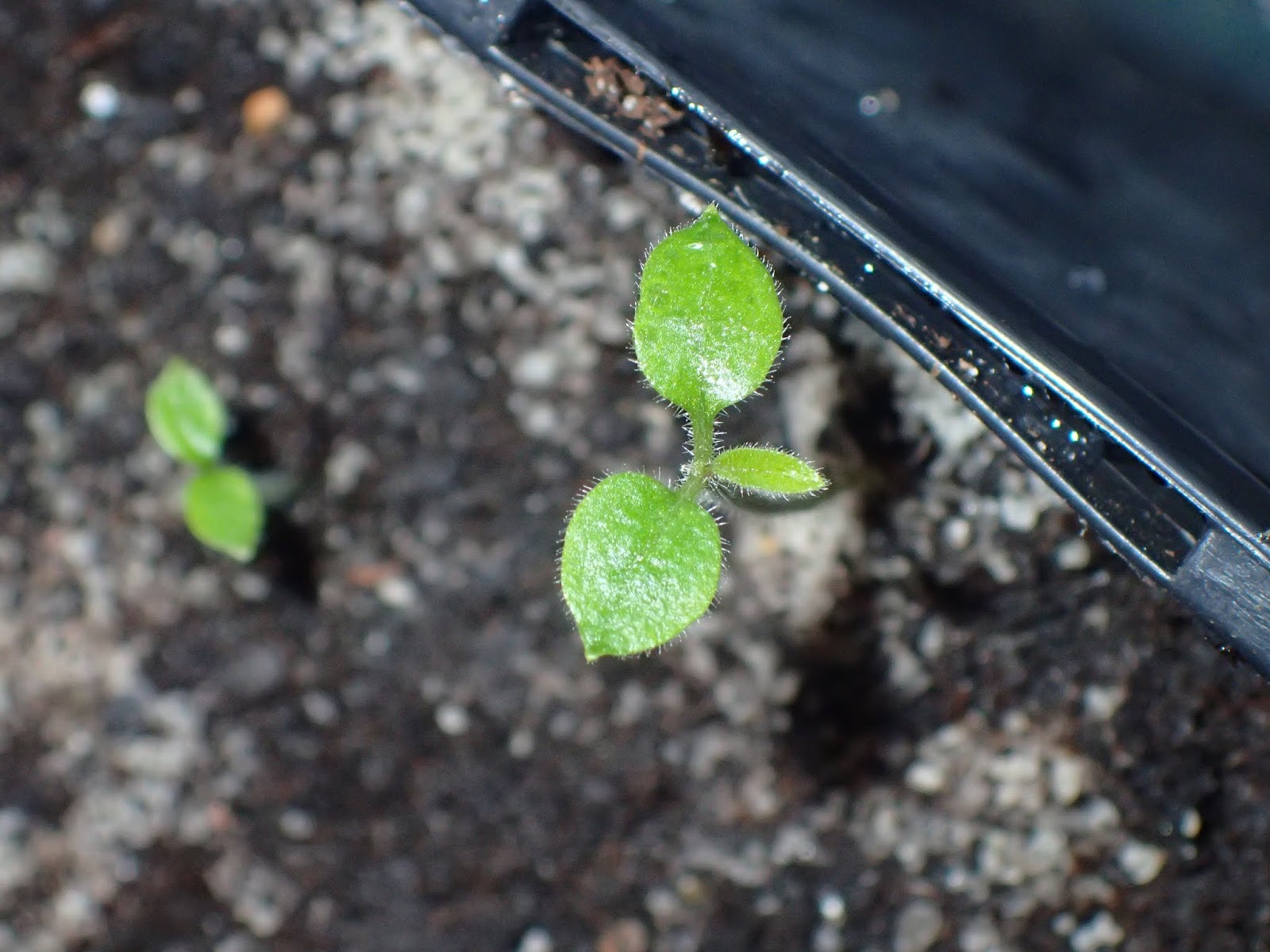
Cyphomandra corymbiflora x fragrans (F1) - young seedling
Bellow I am going to describe my experiences with crossing (hand pollinating the flowers etc.) these 2 species and sowing their hybrid seeds (with photos). I can say that both species are self-incompatible and the flowers are naturally pollinated by bumblebees (at least in Europe), but with very small success in my experience (maybe due to small amount of these insects in my area). I ready that crossing female C. corymbiflora and male C. fragrans gives fertile seeds (and next healthy viable hybrids) but adverse combination (female C. fragrans and male C. cormbiflora) is not succeed.
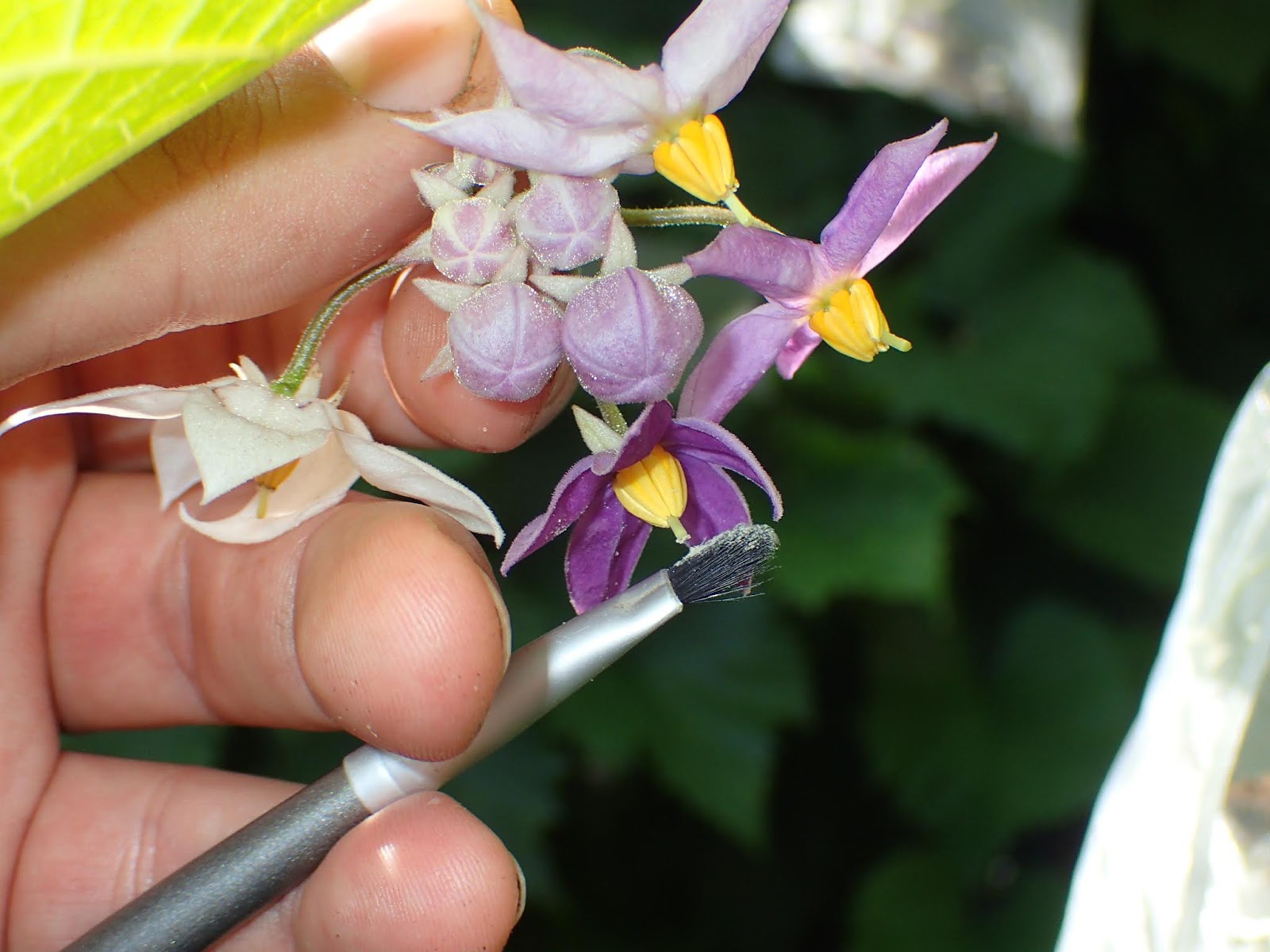
Hand pollinating: I made a mistake and I first started to pollinating already opened flowers (which could be pollinated by bees before) but after first pollination I covered whole inflorescence in organza bag, so next fruits (which I pollinated later) was certain hybrid. Probability that any of these hand pollinated (crossing) fruits is not hybrid, is very low. I had very large success with hybrid hand pollination, because almost all (I estimate it for about 60-70%) pollinated flowers (C. corymbiflora x C. fragrans) developed info fruits (finally I harvested over 20 hybrid fruits). In comparison I harvested only a few (about 5) fruits from flowers pollinated by bumblebees (from 3 trees of C. corymbiflora) after whole long flowering season in 2018 yr. The hand pollinating was made in August (C. cormbiflora flowered from May/June, but C. fragrans created first flowers as late as in early August, so crossing was possible only in this time). I had much more success with hybrid pollination than pollination of C. corymbiflora by pollen of other C. corymbiflora (because it is very difficult to get pollen from flowers of C. corymbiflora, because it creates very little amount of it in its anthers, but the C. fragrans has flowers fully of pollen, so its preparing from them is much easier). I will show how I made pollination on the photos bellow. The fruits ripened about 4 months later, in November and December. In this time plants were stored (since September) in cool cellar in about 5-10C = 41-50F degree first (and next, in end of this period, even only about 2C = 35F degree). So fruits had not very good temperature to ripe well and they fall down half-ripe. Next I stored them in paper bag with ripe apples (which are emitting an ethylene) to they become overripe (within 2-3 weeks after dropping the fruits and harvest). I harvested numerous hybrid seeds but they were worse developed (something smaller) than clean C. corymbiflora and their germination rate was low (about 5%, maybe more). The seedlings are small yet, but they are growing healthy. I will make next update-post when they grow up. I am very curious of appearance of this hybrid. It is said to have intermediate features between its parents. Now there is visible that young seedlings have hairy leaves (similar as female parent – C. corymbiflora).
Cyphomandra fragrans - flowers (young ones are purple, older ones are yellowish)

Harvesting a pollen to hand pollination - 1 step

Harvesting a pollen to hand pollination - 2 step (removing anthers)


Harvesting a pollen to hand pollination - 3 step


Taking a pollen to brush

Hand pollination of flowers Cyphomandra corymbiflora by pollen of C. fragrans


Young fruits a few days after the pollination


Older fruits


A success of hand pollination was high

... in comparison to pollinating to bee pollinating (which was low succeed)

Fruits obtained after crossing pollination Cyphomandra corymbiflora x C. fragrans - just ofter harvesting (still green)

The fruits after overripening

There are visible well developed seeds (paler?) as well as degenerated ones (darker)

Overripe fruits (the fruits after crossing) were distinctly yellowish


The fruits of clean Cyphomandra corymbiflora after overripening (still clean green outside, not yellowish)

The seeds removed from fruits obtained after crossing pollination Cyphomandra corymbiflora x C. fragrans (viable -paler as well as degenerated -darker)

The young seedlings of hybrid of hardy tamarillo's Cyphomandra corymbiflora x fragrans (F1)


I harvested also a few fruits from C. fragrans tree. They were oppen pollinated (I am not sure if hybrid or apomictic – because it is self-incompatible species and I have only 1 tree). The fruits were green when they fall down on January 2019, and they have not became yellow after overrripening (as fruits which I obtained from Brazil a few years ago, which were clean yellow). The thick of fruits was very thick, strong and flesh was acid, but almost without aroma (cool cellar is not the best to ripening the fruits, I think). Inside were several dozen of seeds, but almost all were probably unviable (they have not fall down in water), only 5 seeds were probably viable. I am going to sow them.
Cyphomandra corymbiflora and C. fragrans (comparison) - fruits just after falling


Cyphomandra fragrans - fruits overripening

Cyphomandra fragrans - fruits overripe

It has very strong, thick skin

Cyphomandra fragrans - unviable seeds

Cyphomandra fragrans - 5 viable seeds


February 21, 2019

Garlic Cress – Peltaria alliacea

This is small evergreen perennial full hardy in my zone 6b, which creates edible garlic-like-fragrant leaves, which are the best when used as a winter salad. The inflorescences (aromatic, pungent) are also very tasty. 
The plant prefers a light, fertile, moist soil in sun or light shade. Seeds do not need any pre-treatment and should be sown surface or shallowly (they can be sown immediately outside in mid spring). This is probably self-incompatible species, usually vegetative propagated by sellers and rarely creates fruits. I suppose that to harvesting the seeds there are necessary at least 2 genetically various plants (i.e. obtained from 2 seeds). The fruits are 1-seeded, flat and obovate-round. The seeds are quite large (relatively in comparison to other species of Mustard Family - Brassicaceae). This herb is very hard to find in trading (especially as the seeds). Some garden web-shops sell small potted plants but they are fastly sold out.
This species is evergreen - the leaves are especially delicious in winter and spring
The plants just starting to blooming

The plant in flowers
Young fruits - round, flat siliques (with 1 seed inside of each one)

December 24, 2018

Exotic Nettles (Urtica spp.) - part 2


I have already described some nettle species on March 2018. Now I am writing about my experiences with growing 3 new species + a few additional photos of some ones described before.
Young Tree Nettle, Ongaonga (Urtica ferox)
  American Stinging Nettle - Urtica gracilis (syn. Urtica dioica subsp. gracilis) - this is monoecious perennial to about 1,5m (=5ft) tall, native to northern and central part of USA. Very frost hardy (to at least zone 6/7) and winter dormant. Its stems and leaves are vivid green and scarcely covered by stinging hairs. The young leaves are edible and very delicious when cooked. Nettle beer is brewed from the young shoots. Also medicinal herb. A good flax-like fibre is obtained from the stems (to making string, cloth and good quality paper). Likes moist, fertile soil and full sun to half-shade. Seeds need cold stratification period to germinating. Rarely cultivated in Europe.
Young plants
It has not much stinging (and not stinging) hairs
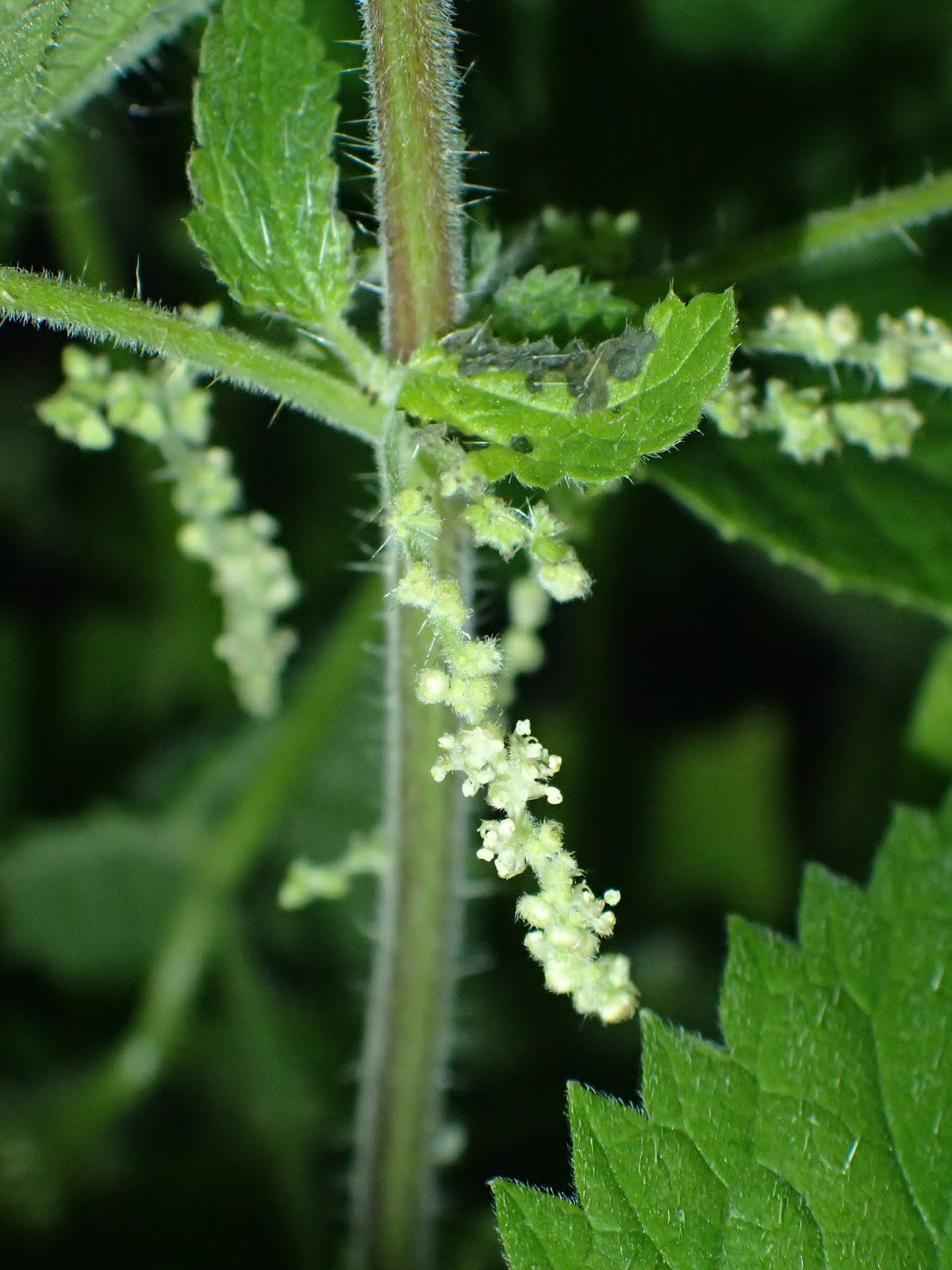
This species is monoecious (female and male inflorescences are on the same plant)
Young fruits
The male (larger) and female flowers
Young infutescence
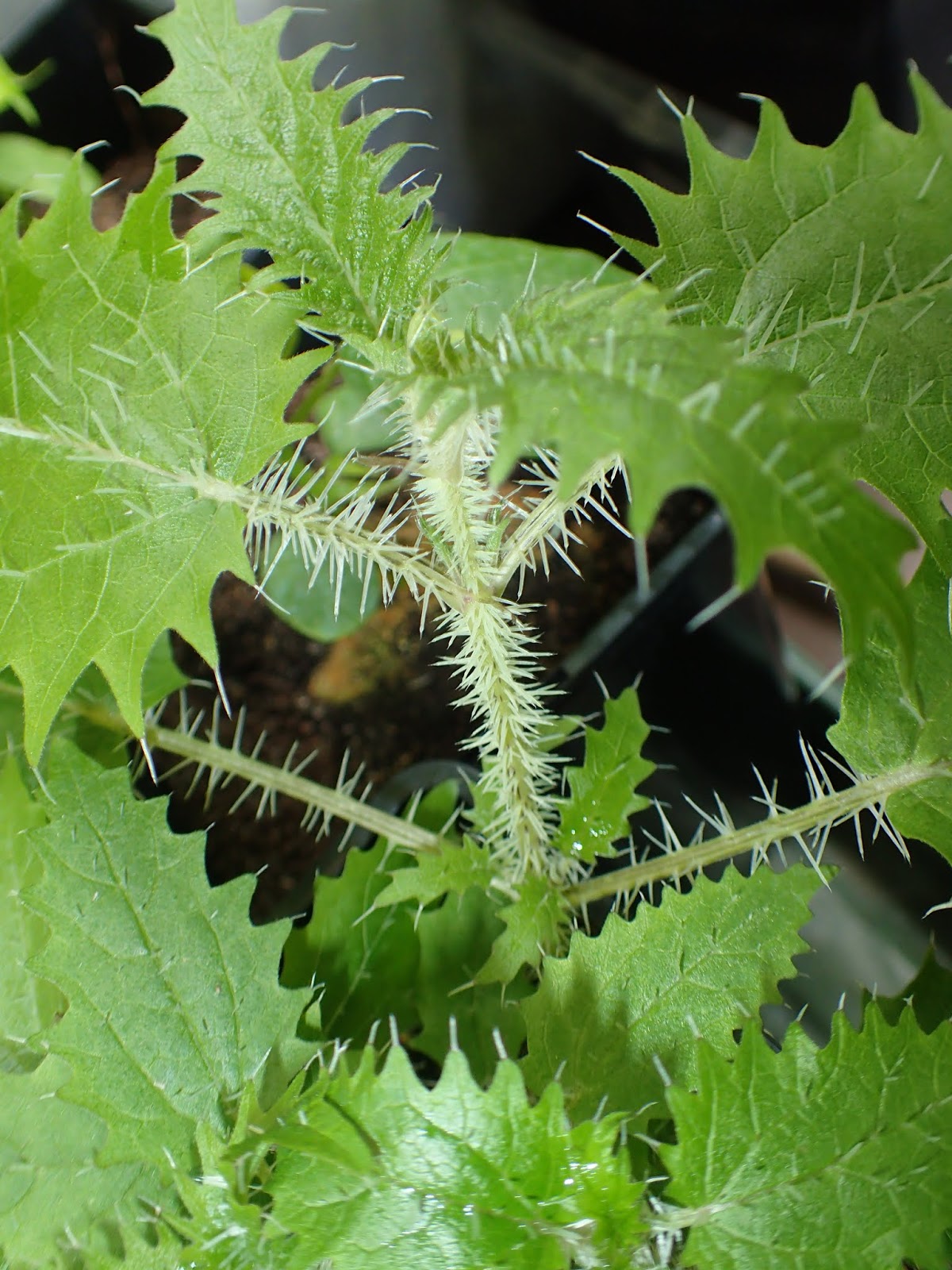
 Hoary Nettle - Urtica holosericea (syn. Urtica dioica subsp. holosericea) - this is monoecious perennial to 2,5m (=8ft) tall, native to western USA. Its stems and leaves are hoary and very densely covered by stinging and not stinging hairs. Drought dormant and something frost resistant. The young leaves are edible and very delicious when cooked. Nettle beer is brewed from the young shoots. Also medicinal herb. A hair wash can be made from the leaves (used as tonic and to anti dandruff treatment). A strong flax-like fibre is obtained from the stems (to making string, cloth and good quality paper). Likes moist, fertile soil and full sun to half-shade. Seeds need cold stratification period to germinating. Very rare in trading.
Young seedlings

This nettle species is densely hairy


It is also monoecious (as previous species)
Male inflorescence
The flowers are inconspicuous
Male inflorescence
I made also a few new photos of species described before:

Hemp-leaved Nettle, Siberian Nettle (Urtica cannabina ):
The plant in flowers
This species of nettle has leaves similar to hemp
Young infrutescence
Kievan Nettle (Urtica kioviensis ):
The plant in flowers
Young infrutescences
Tree Nettle, Ongaonga (Urtica ferox):
It is very hard to wintering in nothern temperate areas (even on window sill) and very susceptible to mealybugs (they can easily kill the plant).
Young plants
This nettle species plants are covered by very large, strong stinging hairs
And burns very much
This is also very ornamental
 Last season I tried also growing various accessions of Common Nettle (Urtica dioica) native to sutropical areas (Brasil, Spain). These accessions had different appearance, but they all were dioecious. There are a few photos bellow:
Common Nettle (U. dioica) ex Brasil - female plant
Common Nettle (U. dioica) ex Brasil - male inflorescence
Common Nettle (U. dioica) ex Spain (first accession) - male plant
Common Nettle (U. dioica) ex Spain (first accession) - female plant
Common Nettle (U. dioica) ex Spain (first accession) - this form has very hairy stem
Common Nettle (U. dioica) ex Spain (second accession - less hairy, with long, narrow leaves) - male plant
Common Nettle (U. dioica) ex Spain (second accession - less hairy, with long leaves) - female plant
Common Nettle (U. dioica) ex Spain (third accession)


Common Nettle (U. dioica) ex Spain (third accession) - female plant
Common Nettle (U. dioica) ex Spain (third accession) - male inflorescence


Hybrid of Hardy Tamarillo’s (Cyphomandra corymbiflora x fragrans) - current update

 We are pleased to have good news. Just yesterday an article was published about the new varieties of Tamarillo that we later breded. The en...